
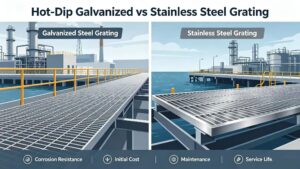
When purchasing steel grating for industrial platforms, walkways, trench covers, stair treads and heavy‑duty access decks, global project buyers always face one core question: should I choose hot‑dip galvanized steel grating or stainless‑steel grating?
Both two material solutions can deliver qualified load‑bearing performance when adopting identical bearing‑bar specifications. However, their anti‑corrosion mechanism, initial purchase cost, long‑term maintenance requirement, service‑life performance and applicable working‑conditions are quite different.
Wrong material selection may bring premature rust, frequent maintenance, high later‑stage replacement expense or unnecessary over‑investment for your whole project.
In this in‑depth blog, we will compare hot‑dip galvanized carbon‑steel grating and stainless‑steel grating from multiple dimensions, share typical application cases, list key decision‑making factors, and give practical selection advice for engineers, procurement managers and EPC contractors.
After reading this guide, you can pick the most cost‑effective steel‑grating material for your unique site conditions and project budget.
Basic Introduction Of Two Main‑stream Steel‑Grating Materials
Hot‑Dip Galvanized Steel Grating
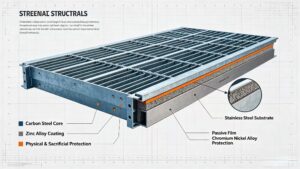
Hot‑dip galvanized steel grating is fabricated from Q235 / ASTM A36 carbon‑steel bearing bars and cross‑bars by pressure‑welding.
After full welding, finished panels go through the standard hot‑dip‑galvanizing procedure. The steel grating is immersed inside molten zinc. A thick, tightly‑bonded zinc‑alloy coating forms on every steel‑part surface for anti‑rust protection.
Zinc provides dual‑way protection: physical barrier shielding, plus sacrificial galvanic protection. Even small scratches expose base carbon‑steel, surrounding zinc will corrode preferentially and prevent the substrate from rusting.
Hot‑dip galvanized steel grating is the most widely‑used, economical option for general‑purpose industrial‑construction all over the world. We can produce plain‑type or serrated anti‑slip galvanized grating, custom‑cut to your required dimensions, including irregular‑shaped panels, stair treads and drainage trench covers.
Stainless‑Steel Grating
Stainless‑steel grating is welded from solid stainless‑steel bars, common grades are SS304, SS316 and SS316L.
Unlike galvanized carbon‑steel grating relying on external zinc coating, stainless‑steel material itself contains chromium‑nickel alloy elements. A passive anti‑corrosion film generates automatically on the metal surface when exposed to air. No extra galvanized layer is required for long‑term rust‑proof performance.
‑ Grade 304 stainless‑steel grating works well for general‑corrosion‑level environments.
‑ Grade 316 / 316L adds molybdenum element, with outstanding chloride‑salt‑spray‑resistance, suitable for marine‑coastal, high‑salinity and strong‑chemical‑corrosion sites.
Our factory supplies custom stainless‑steel grating, heavy‑duty stainless‑steel grating, notched & bent special‑shape grating complying with international project standards.
Suitable Application Scenarios For Each Material
✅ Best‑fit scenarios for Hot‑Dip Galvanized Steel Grating
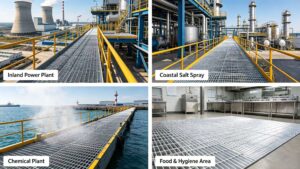
‑ Inland industrial‑plant pedestrian & forklift‑passing platforms and walkways
‑ Power‑generation‑station working platforms, maintenance access stair treads
‑ General‑grade mining‑site access routes, factory‑warehouse loading ramps
‑ Municipal‑infrastructure drainage trench covers, park & logistics‑park outdoor walkways
‑ Ordinary‑pollution‑level inland wastewater‑treatment‑plant flooring
‑ Large‑volume projects with tight budget, normal‑corrosion‑risk environment.
✅ Best‑fit scenarios for Stainless‑Steel Grating
‑ Coastal‑zone, dock, port‑terminal platforms suffering from sea‑salt‑spray corrosion
‑ Chemical‑industry workshops exposed to acid, alkali, solvent volatile‑gas
‑ Food‑processing, beverage, pharmaceutical plants requiring high‑hygiene standards & frequent high‑pressure wash‑down
‑ Seawater‑desalination, marine‑aquaculture, offshore‑support‑facility flooring
‑ Projects that expect 20‑30‑year stable service life with minimum‑possible later‑stage maintenance & shutdown‑repair downtime.
Key Factors You Need To Confirm Before Final Selection
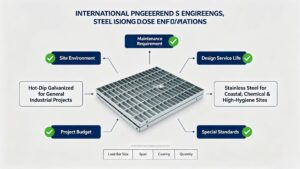
Before you confirm steel‑grating material for your project, check these 5 core factors one‑by‑one:
1. Site‑environment analysis: indoor or outdoor; inland or coastal; whether exposed to salt‑spray, acid‑alkali vapour, frequent chemical‑water flushing.
2. Expected design‑service‑life of the whole industrial facility.
3. Project‑budget allocation: initial‑purchase‑budget and reserved long‑term maintenance‑budget.
4. Local‑region after‑sales‑service condition for grating repair & replacement.
5. Special‑industry compliance‑requirements: food‑grade hygiene‑standards, marine‑project‑specifications etc.
If you are still confused after self‑assessment, you can send your site‑condition description, drawings and load‑bearing requirements to our engineering team. We will provide professional material‑selection suggestions for your reference.
Conclusion
There is no absolute “better” option between hot‑dip galvanized steel grating and stainless‑steel grating. The right choice fully depends on your project‑specific environment, design‑life requirement and budget arrangement.
Hot‑dip galvanized carbon‑steel grating remains the mainstream, highly‑cost‑effective solution for inland ordinary‑corrosion‑industrial‑construction.
Stainless‑steel grating (304 / 316 / 316L) is the long‑run reliable choice for coastal, marine, chemical‑corrosive, high‑sanitation‑standard‑critical facilities.
As an experienced China‑based steel‑grating manufacturer, we can supply custom hot‑dip galvanized steel grating, stainless‑steel grating, heavy‑duty steel grating, stair treads, trench covers and all related accessories complying with global‑recognized international standards.
If you have ongoing projects requiring steel‑grating quotation or technical‑support, please feel free to send your drawings and specifications to our team, we will prepare a detailed, competitive proposal for you.